
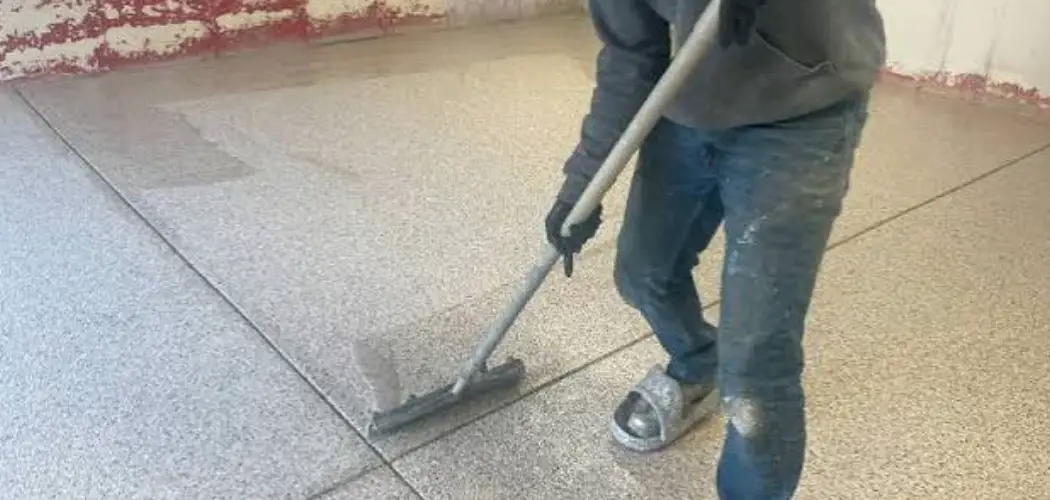
A clean garage floor does more than just look good. It stops oil stains from setting in permanently, cuts down on slip hazards, and quietly extends the life of your concrete. The catch? Most people assume you need a pressure washer to get meaningful results. You don’t.

With the right tools, some focused effort, and a logical sequence of steps, you can restore your garage floor to near-pristine condition using supplies you likely already own. This guide on how to clean garage floor without pressure washer covers everything: the tools you’ll need, a seven-step cleaning process, the mistakes worth avoiding, and answers to the questions homeowners ask most often.
Why Do Garage Floors Get So Dirty So Fast?
Garage floors take more abuse than almost any other surface in a home. Oil drips from vehicles, tire marks, mud tracked in from outside, and layers of fine dust all compound over time in ways that a push broom alone can’t fix. The reason it gets so bad so quickly comes down to the material itself—concrete is porous, meaning liquids like oil and grease don’t just sit on the surface. They sink in.
That distinction matters. A stain that’s been sitting for a week behaves very differently from one you caught yesterday. Fresh oil responds well to absorbents and a light degreaser. Something older and deeper may require multiple rounds of scrubbing with a concentrated solution. Knowing what you’re dealing with before you start saves time and prevents the frustration of using the wrong approach.
Tools and Materials You’ll Need
Before you start, gather everything in one place. Stopping mid-clean to find a missing brush or running to the hardware store breaks your momentum and lets the cleaning solution dry on the surface, which creates its own problems.
Stiff-Bristle Scrub Brush or Push Broom
Your primary tool for loosening dirt and working cleaning solution into the concrete. A push broom covers more ground on larger floors, while a handheld scrub brush gives you better control over stubborn spots.
Bucket and Mop
You’ll need a bucket to mix your solution and a mop to distribute it evenly across the floor before scrubbing.
Concrete Degreaser or Dish Soap
A commercial concrete degreaser is the better option for oil and grease stains. For lighter general cleaning, dish soap diluted in warm water works surprisingly well—and it’s already in most kitchens.
Absorbent Material (Cat Litter, Baking Soda, or Sawdust)
These materials draw fresh oil up and out of the concrete’s pores before scrubbing begins. Cat litter tends to be the most effective for larger spills; baking soda works well for smaller, more recent stains.
Garden Hose With a Spray Nozzle
A standard garden hose with a decent spray nozzle provides enough water pressure to rinse the floor thoroughly. No pressure washer required.
Protective Gear (Gloves and Safety Goggles)
Degreasers and heavy-duty cleaning solutions can irritate skin and eyes, particularly in an enclosed space with limited airflow. Don’t skip this step.
Wet/Dry Vacuum (Optional)
Not essential, but genuinely useful. A wet/dry vacuum speeds up drying time significantly and removes dirty water before it settles back into the concrete.
7 Steps on How to Clean Garage Floor Without Pressure Washer
Step 1: Clear the Garage Floor Completely
Move everything out—vehicles, tools, storage boxes, all of it. The more unobstructed floor space you have, the more thorough the cleaning will be. Pulling items out also gives you a chance to notice stains or damage you may have been walking past without realizing it.
Step 2: Sweep Away Loose Dirt and Debris
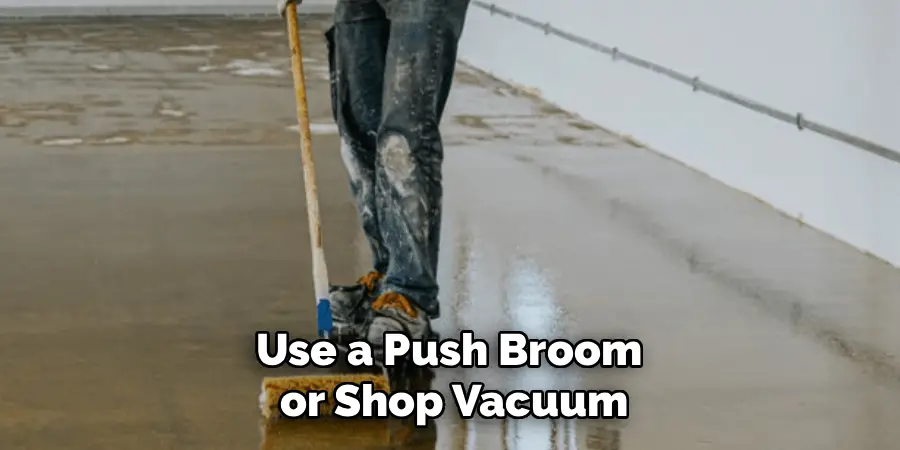
Use a push broom or shop vacuum to remove all loose dirt, dust, and debris before any water touches the surface. Pay close attention to corners and the perimeter, where buildup tends to accumulate. Skipping this step means you’ll spend the next hour pushing muddy water around rather than actually cleaning anything.
Step 3: Treat Oil and Grease Stains With an Absorbent
Pour a generous layer of cat litter, baking soda, or sawdust directly onto any oil or grease stains. Press it down firmly with your foot and let it sit for at least 30 minutes—longer if the stain has been there for a while. The material draws oil upward out of the concrete’s pores. Once the time is up, sweep it away and dispose of it before moving on to the next step.
Step 4: Apply Your Cleaning Solution
Mix your concrete degreaser or dish soap with warm water in a bucket, following the product’s recommended ratio. Starting from the far end of the garage and working toward the door, pour or spread the solution across the floor. This keeps you from walking back through sections you’ve already cleaned. Let the solution sit for five to ten minutes—this dwell time is what allows it to break down embedded grease rather than just sitting on top of it.
Step 5: Scrub the Floor Thoroughly
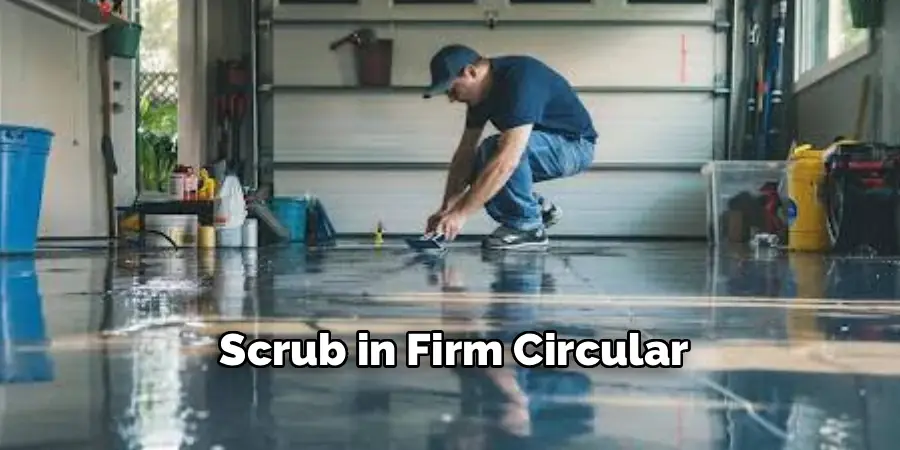
Using your stiff-bristle brush or push broom, scrub in firm circular motions across the entire surface. High-traffic zones near the entrance and where vehicles typically park will need the most attention. For stubborn stains, apply a small amount of undiluted degreaser directly to the spot and work it in more aggressively. This step is the most physically demanding part of the process, and also the most important—it’s what separates a surface rinse from an actual deep clean.
Step 6: Rinse With a Garden Hose
Once you’ve scrubbed the full floor, use your garden hose to rinse away the cleaning solution, working from the back of the garage toward the door to push dirty water outside. Rinse thoroughly. Soap residue left on concrete becomes a slip hazard when wet and tends to attract dirt faster than a clean surface would. Use your push broom to guide water toward the drain or garage opening as needed.
Step 7: Dry the Floor Completely

Use a wet/dry vacuum to remove standing water, then allow the floor to air dry fully before bringing anything back in. Depending on ventilation and humidity, this could take one hour or several. Open windows and the garage door, or set up a box fan to speed things along. Parking a vehicle on damp concrete is a mistake—it traps moisture against the surface and, over time, can cause deterioration beneath any floor mats or coatings you’ve installed.
Following these steps on how to clean garage floor without pressure washer should leave your garage floor looking clean and well-maintained.
Common Mistakes That Undermine the Whole Process
A few missteps tend to come up repeatedly, and they’re worth knowing in advance.
Skipping the initial sweep is the most common one. Applying water to a surface covered in loose debris doesn’t clean it—it just creates a muddy paste that spreads grime rather than lifting it.
Using bleach on oil stains is another frequent error. Bleach handles mold and mildew effectively, but it does nothing to break down grease and can gradually discolor concrete with repeated use.
Letting the cleaning solution dry on the surface before rinsing leaves a residue that attracts dust and, paradoxically, can make the floor look worse than it did before you started. Always rinse while the solution is still wet.
Finally, rushing the drying phase. Bringing vehicles back onto a damp floor seals moisture into the concrete and creates conditions for mold growth, particularly under rubber mats or epoxy coatings.
When Does It Make Sense to Call a Professional?
For most homeowners dealing with regular maintenance and moderate staining, the DIY process above is more than sufficient. That said, there are situations where professional cleaning services may be worth considering.
Deep-set stains that have been left untreated for years, or floors with significant cracking and surface deterioration, may respond better to industrial-strength equipment and chemical treatments that go beyond what’s available to consumers. Professional services also typically include surface preparation for coatings or sealants—a worthwhile step if you’re planning to apply an epoxy finish down the line.
For everyday cleaning and routine upkeep, though, doing it yourself saves both money and time, and the results are genuinely comparable when the process is followed correctly.
How Much Does It Cost to Clean a Garage Floor Without a Pressure Washer?
This is one of the more affordable home maintenance tasks you can take on. A bottle of commercial concrete degreaser typically runs between $10 and $25, and most households already own the remaining supplies—a bucket, scrub brush, garden hose, and baking soda. If you need to buy everything from scratch, expect to spend no more than $40 to $60 in total.
Professional garage floor cleaning, by comparison, generally costs between $150 and $400, depending on the size of the space and the severity of the staining. For standard cleaning jobs, the DIY route delivers comparable results at a fraction of that cost. Regular maintenance every few months also prevents the kind of gradual buildup that turns a simple clean into a half-day project.
Frequently Asked Questions
Can I Use Vinegar to Clean a Garage Floor?
White vinegar works as a mild cleaning agent for light surface dirt and general grime. It won’t, however, cut through oil or grease stains, so it’s not a substitute for a proper concrete degreaser. Worth noting: vinegar should be kept away from sealed or polished concrete surfaces, as its acidity may gradually break down protective coatings with repeated use.
How Often Should I Clean My Garage Floor?
Spot-cleaning for fresh stains should happen as soon as spills occur—the longer oil sits, the deeper it penetrates. A full deep clean is reasonable at least twice a year, though garages that see heavy vehicle use or seasonal road salt tracked in from outside may benefit from more frequent attention.
What Is the Best Way to Remove Old, Set-In Oil Stains?
Apply a concentrated commercial degreaser directly to the stain and let it sit for 15 to 20 minutes before scrubbing with a stiff-bristle brush. Stubborn stains may need two or three rounds of this treatment. Poultice-based stain removers, available at most hardware stores, are another option worth considering for deeply embedded oil that doesn’t respond to standard degreasers.
Do I Need Special Equipment to Rinse Without a Pressure Washer?
No special equipment is needed. A standard garden hose fitted with a spray nozzle provides adequate pressure for rinsing concrete effectively. The key is to rinse thoroughly and use a push broom to help guide water toward the drain or garage opening rather than letting it pool.
Is It Safe to Use Cleaning Solutions in an Enclosed Garage?
Most commercial degreasers carry some level of fume risk in poorly ventilated spaces. Open the garage door and any nearby windows before you begin, and wear gloves and safety goggles throughout the process. If the space feels stuffy, a box fan positioned at the opening can help pull fumes out while you work.
Keep Your Garage Floor Clean Year-Round
Maintaining a clean garage floor doesn’t require expensive equipment or professional help. The seven-step process outlined here handles most standard concrete floors, from fresh tire marks to longstanding grease stains, using tools and supplies that cost under $60 in total.
Start with a simple sweep, address stains before they have a chance to set, and schedule a full deep clean at least twice a year. It’s a small investment of time that pays off in a safer, better-looking space—and one that’s far easier to maintain once you’ve established the habit. Thanks for reading this guide on how to clean garage floor without pressure washer.

I am Rick. I grew up helping my dad with his handyman service. I learned a lot from him about how to fix things, and also about how to work hard and take care of business. These days, I’m still into fixing things- only now, I’m doing it for a living.
I’m always looking for new ways to help people grow and develop. That’s why I have created this blog to share all my experience and knowledge so
that I can help people who are interested in DIY repair.