
There are few things more frustrating than pulling up to your driveway in a rainstorm, pressing the button on your visor, and watching nothing happen. You inch forward, press it again, and still nothing. Eventually, you are practically bumper-to-door before the mechanism finally engages. If this scenario sounds familiar, you are likely dealing with a weak signal and wondering how to increase garage door remote range effectively.
This is a common issue for many homeowners, but the good news is that you rarely need to replace the entire system to fix it. Often, the problem stems from simple interference, worn-out batteries, or antenna positioning rather than a mechanical failure. By understanding the basics of radio frequency signals and making a few strategic adjustments, you can restore the convenience of opening your door from a comfortable distance. This guide will walk you through practical, low-cost solutions to boost your opener’s performance, ensuring you never have to sit in the rain waiting for your garage to open again.
Why Signal Strength Matters
A reliable garage door opener is not just about convenience; it is a matter of safety and security. When your remote range is weak, you are forced to wait outside your home longer than necessary, which can be unsettling late at night or during severe weather. A strong signal allows you to open the door as you approach, letting you drive straight in without pausing in the street or driveway.
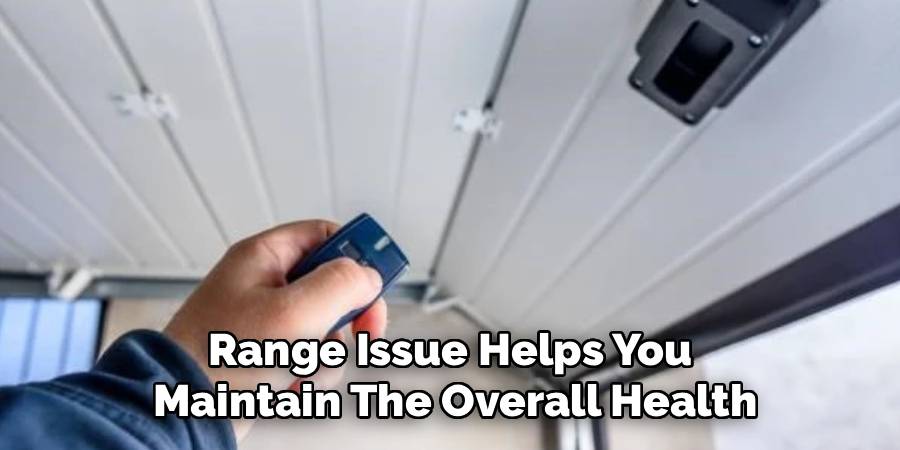
Furthermore, struggling with a weak signal often indicates underlying issues with your home’s electronics or the opener itself. Radio frequency interference (RFI) can affect other devices in your home, and a failing receiver might be a symptom of broader electrical problems. Addressing the range issue helps you maintain the overall health of your garage door system, preventing premature wear on the motor caused by repeated, failed signal attempts. Taking the time to optimize your signal ensures seamless access to your home and extends the lifespan of your equipment.
Step-by-Step Guide on How to Increase Garage Door Remote Range
Improving your remote’s performance is a process of elimination. Start with the simplest fixes and move toward more complex solutions. Follow these steps to diagnose and resolve signal issues.
Step 1: Replace the Remote Batteries
The most common culprit for a weak signal is simply a dying battery. Even if the little LED light on your remote still flickers when you press the button, the voltage might be too low to send a strong signal across the driveway. As batteries age, their power output drops, significantly reducing the effective transmission distance. Open the casing of your remote and swap out the old lithium or alkaline batteries for fresh, high-quality replacements. This is the easiest and cheapest fix, and it often restores full functionality immediately without requiring any further tinkering with the main opener unit.
Step 2: Check for Radio Frequency Interference
Modern homes are filled with electronic devices that emit signals, many of which can crowd the airwaves your garage door opener uses. Common sources of interference include LED light bulbs, gaming consoles, wireless routers, and even nearby power lines. If you have recently installed new LED bulbs in the garage door opener itself, remove them temporarily to see if the range improves. These bulbs can emit frequencies that block the remote’s signal. By systematically unplugging nearby electronics one by one, you can identify if a specific device is causing the disruption and relocate it away from the receiver.
Step 3: Inspect and Reposition the Antenna
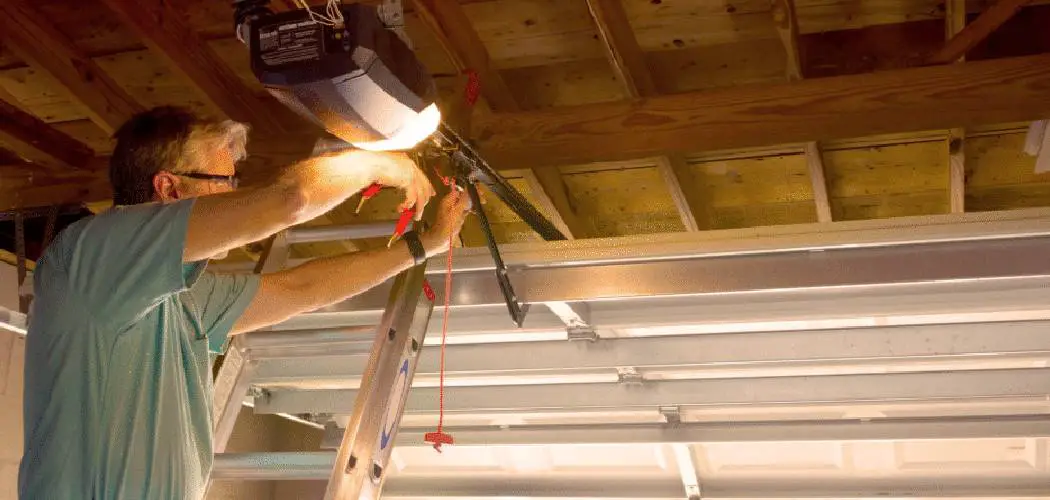
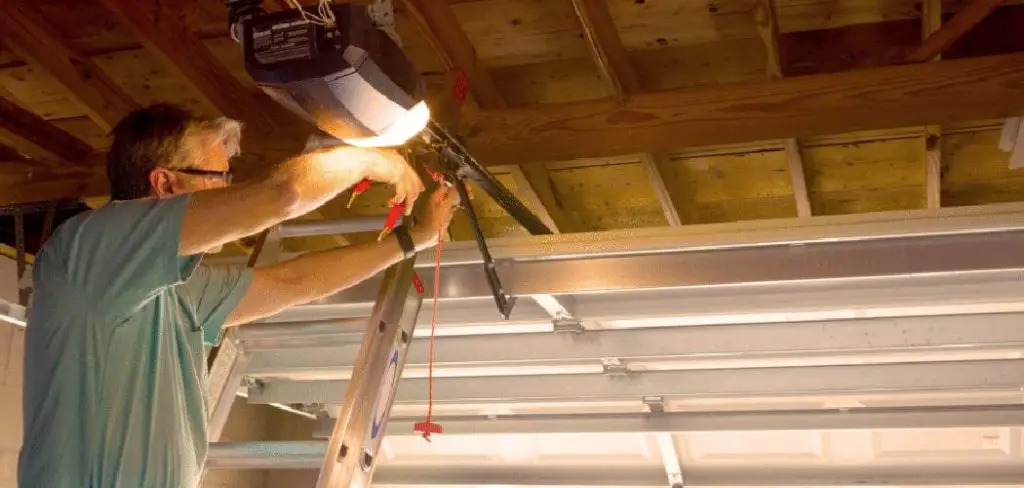
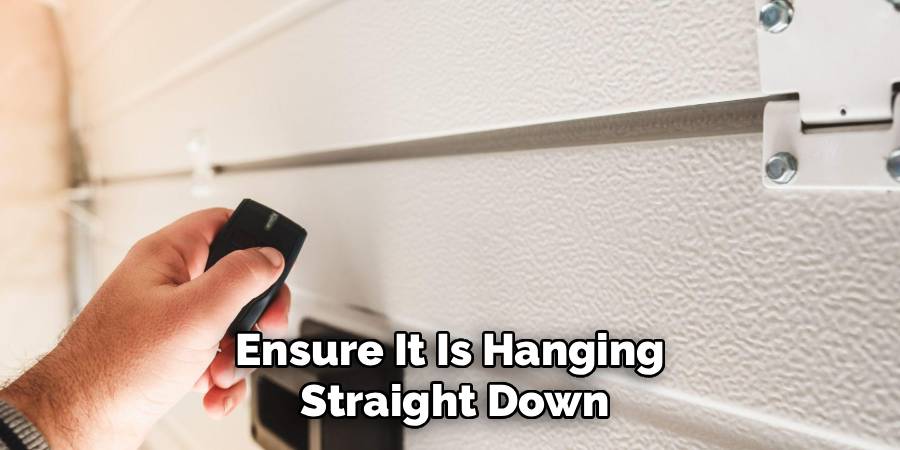
Your garage door motor unit has a small antenna wire hanging from it, which serves as the receiver for your remote’s signal. Over time, this wire can get tucked up inside the housing, damaged, or curled into a position that limits reception. Locate this wire and ensure it is hanging straight down, fully extended away from the metal motor housing. If the wire is damaged or cut, the reception will be severely compromised. Straightening this simple piece of wire can often double your range by giving the signal a clear path to the receiver without obstruction from the motor’s metal casing.
Step 4: Extending the Antenna Outside
If straightening the wire doesn’t solve the problem, you may need to extend the antenna outside the garage. Metal garage doors and thick concrete walls can act as a Faraday cage, blocking radio waves from entering. You can purchase a coaxial cable extension kit designed specifically for garage openers. This involves attaching a longer wire to the existing antenna terminal and running it through the wall to the exterior of the garage. By placing the receiving point outside the physical barrier of the door, you eliminate the obstruction entirely, allowing the remote to communicate directly with the receiver from a much greater distance.
Step 5: Upgrade to a Better Remote
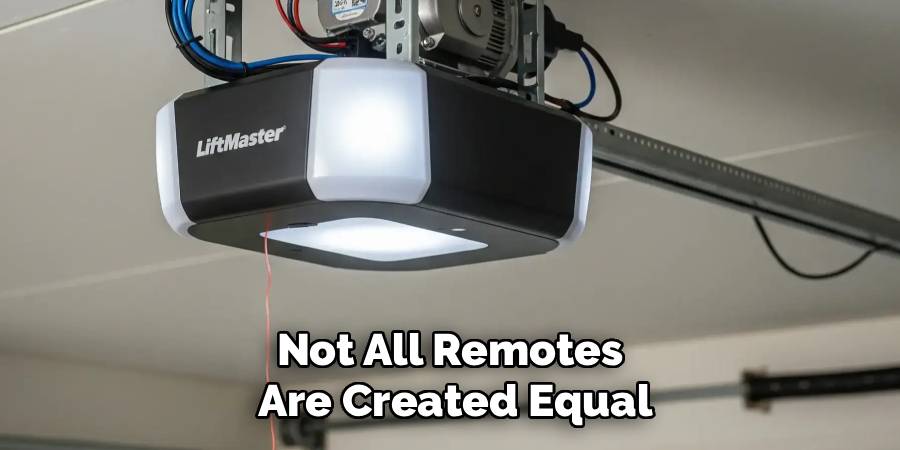
Not all remotes are created equal, and older models may operate on frequencies that are more susceptible to modern interference. If your system is aging, consider purchasing a universal remote with a higher quality transmitter. These newer remotes often have stronger output power and use dual-frequency technology, which switches between frequencies to find the clearest channel. When researching how to increase garage door remote range, upgrading the handheld unit is often overlooked, but a modern remote can cut through interference much better than a ten-year-old clicker that has been dropped on the driveway a dozen times.
Step 6: Install a Logic Board Replacement
In some cases, the receiver built into the garage door opener’s logic board is simply failing due to age or electrical surges. If you have tried batteries, antennas, and new remotes with no luck, the internal electronics may be the issue. You can often buy a replacement logic board for your specific model online. Installing this requires unplugging the unit, unscrewing the back panel, disconnecting the wire harnesses, and swapping in the new board. While it sounds technical, it is usually a plug-and-play repair that renews the entire “brain” of the opener, restoring it to factory-fresh signal sensitivity.
Step 7: Clean the Battery Contacts
Corrosion inside the battery compartment can create resistance that weakens the power reaching the transmitter. Open your remote and inspect the metal contact points where the battery sits. If you see any white or green buildup, or if the metal looks dull and oxidized, clean it carefully. Use a cotton swab dipped in a small amount of white vinegar or isopropyl alcohol to wipe away the corrosion. Gently scrape the contacts with a small screwdriver or sandpaper to expose fresh metal. This ensures maximum conductivity, allowing the full power of the fresh battery to generate the strongest possible signal.
Frequently Asked Question
Can LED Light Bulbs Affect Garage Door Opener Range?
Yes, LED light bulbs are a very common source of interference for garage door openers. The driver circuits inside cheaper LED bulbs emit radio frequencies that can overlap with the frequency used by your remote control (typically 315 MHz or 390 MHz). This creates a “noise” that blocks the signal from reaching the receiver. To fix this, switch to LED bulbs specifically labeled as “garage door opener compatible” or revert to incandescent bulbs to see if the range improves.
Where Is the Antenna on a Garage Door Opener?
The antenna is typically a short, insulated wire that hangs down from the main motor unit mounted on your garage ceiling. It is usually about six to ten inches long and may be black, grey, or yellow. Sometimes, installers or homeowners accidentally tuck this wire up inside the light cover or tape it to the metal chassis to make it look neater. For the best reception, this wire needs to dangle freely, straight down, away from any metal parts.
How Far Should a Garage Door Remote Work?
A standard functioning garage door remote should operate from a distance of about four to five car lengths, or roughly 50 feet. High-quality systems in ideal conditions with no interference can work from up to 100 feet away. If you have to be right in front of the door—or practically touching it with your bumper—before it opens, your system is underperforming and likely suffers from interference or a weak signal that needs troubleshooting.
Does Extending the Antenna Wire Really Help?
Yes, extending the antenna is often the most effective solution for range issues, especially if you have a metal garage door or metal siding. Metal acts as a shield that blocks radio waves. By adding an extension kit that runs the antenna wire from the motor unit through the wall to the outside of the garage, you bypass this barrier. This gives the remote a direct line of sight to the antenna, significantly boosting the operational range.
Can a Neighbor’s Opener Interfere with Mine?
It is possible, though less common with modern “rolling code” technology. In older systems that used fixed dip switches, a neighbor with the same code setting could accidentally open your door or jam your signal. Modern openers use billions of code combinations, so they won’t open your door, but strong radio signals from nearby powerful electronics or ham radios could potentially overwhelm your receiver. If interference persists, upgrading to a dual-frequency system can help avoid this congestion.
Conclusion
Living with a garage door opener that only works from five feet away is an unnecessary hassle. By systematically checking your batteries, clearing out interference from LED bulbs, and optimizing your antenna placement, you can regain the convenience you expect from your home automation. You don’t need to be an electrical engineer to solve these problems; patience and a process of elimination are usually all that is required.
Remember that radio frequency is invisible and easily blocked, so small changes often yield big results. Whether you simply straighten a wire or install an external antenna kit, the effort is worth it for the safety and ease of seamless entry. Now that you know exactly how to increase garage door remote range, you can fix the issue this weekend and enjoy the satisfaction of a door that opens the moment you turn into your driveway.

I am Rick. I grew up helping my dad with his handyman service. I learned a lot from him about how to fix things, and also about how to work hard and take care of business. These days, I’m still into fixing things- only now, I’m doing it for a living.
I’m always looking for new ways to help people grow and develop. That’s why I have created this blog to share all my experience and knowledge so
that I can help people who are interested in DIY repair.